Gum Tragacanth vs. Plain Water for Burnishing Leather Edges
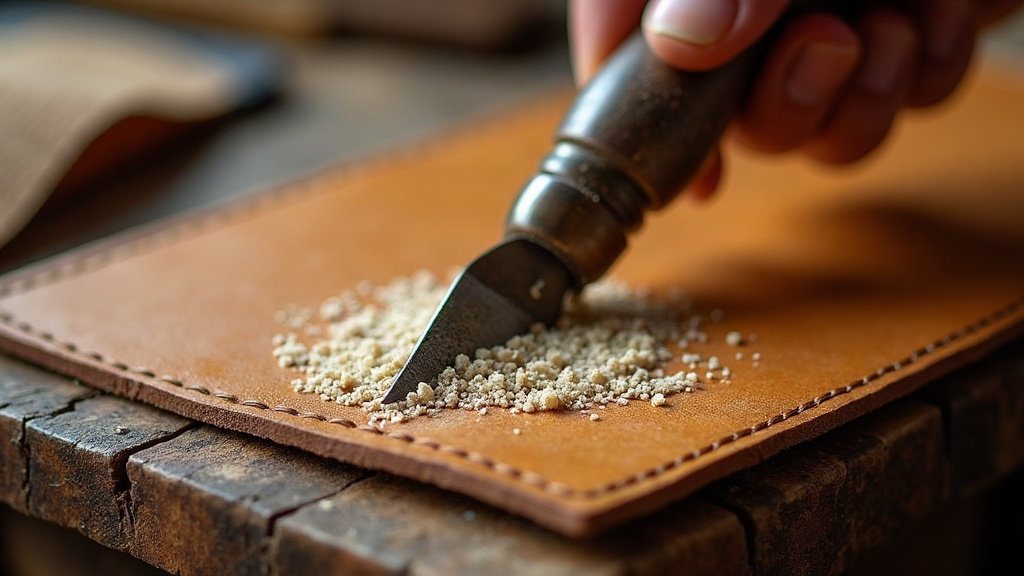
If you’ve ever wet your finger, rubbed it along a leather edge, and ended up with a fuzzy, dull strip instead of that glassy shine you were hoping for, you already know: not every liquid gets you there. For burnishing firm temper vegetable-tanned leather, gum tragacanth almost always beats plain water. It seals the fibers better, builds a harder sheen, and resists going fuzzy again once it dries. Water’s cheaper, sure, and it’s perfectly fine for quick, casual work, but it just doesn’t hold up on edges that will see real handling day after day.
Why the Burnishing Medium Matters
Burnishing works by combining friction and moisture to compress and fuse the loose fibers along a cut edge into something smooth and polished. The medium you apply before slicking isn’t just there to lubricate things. It’s doing actual chemical work. A good medium softens the fibers enough that they bond together under pressure, then hardens as it dries so that smoothness stays put.
What Plain Water Does
Water is where most beginners start, and honestly, that makes sense:
- It’s free, always on hand, no prep required
- It softens fibers fast, so initial slicking goes smoothly
- It works fine on softer or lightly tanned leathers
The catch? Water carries no binding agent. Once it evaporates, the fibers are held together purely by friction-compression, nothing more. On firm temper leather (the dense, thick veg-tan used for belts, holsters, and other structural pieces), that’s often not enough. The edge might look great right after you finish burnishing, then turn fuzzy again within a few days, especially once humidity or regular handling get involved.
What Gum Tragacanth Does
Gum tragacanth is a natural plant-derived gum, typically dissolved in water to make a light, slightly viscous solution. Apply it to a cut edge and here’s what happens:
- It soaks into the fiber structure and acts as a mild adhesive as it dries
- It leaves a thin, hardened film that reinforces the burnished surface
- It produces a noticeably glossier, glass-like finish next to water alone
- It resists reabsorbing moisture, so the edge stays smooth for longer
Here’s the interesting part: because firm temper leather has a denser fiber structure, it actually gets more out of tragacanth’s binding effect than softer leathers do. The density holds the burnish in place to begin with; the gum just locks it there for good.
Side-by-Side Comparison
| Factor | Plain Water | Gum Tragacanth |
|---|---|---|
| Cost | Free | Low (concentrate goes a long way) |
| Prep time | None | Mix with water, let dissolve (hours) |
| Gloss level | Moderate | High |
| Durability | Fades with handling/humidity | Holds up long-term |
| Best for | Quick projects, soft leather | Firm temper, belts, straps, holsters |
| Learning curve | None | Slightly more technique-dependent |
Technique Tips for Each Method
Burnishing with Water
- Dampen the edge lightly with a cloth or dauber. Don’t soak it, just enough to wet the surface.
- Slick with a wood or canvas burnisher, running at high friction speed.
- Do 2-3 passes, re-wetting as needed.
- Let it dry fully before you handle it.
Burnishing with Gum Tragacanth
- Mix tragacanth powder with water (roughly 1 part gum to 8-10 parts water) and let it sit overnight so it dissolves completely.
- Apply a thin, even coat to the edge with a dauber.
- Slick right away while the gum’s still tacky, using firm, even pressure.
- Add a second thin coat and slick again for maximum gloss.
- Give the edge several hours to cure before putting it to use.
Common Mistakes
- Over-wetting with water: leaves you with a soggy edge that takes forever to slick and might never fully harden.
- Mixing tragacanth too thick: creates a gummy, uneven build-up instead of a smooth film. Go thinner than you think you need.
- Skipping sanding or beveling first: no medium, however good, fixes a poorly prepped edge. Smooth prep comes before burnishing, always.
- Not letting tragacanth cure: handle the leather too soon and you’ll smudge the film before it’s had a chance to harden.
Which Should You Choose?
For quick projects, samples, or leather that won’t take much abuse, plain water is a reasonable, zero-cost choice. But for firm temper leather headed toward belts, wallets, holsters, or anything that gets gripped, flexed, or dampened repeatedly, gum tragacanth is the clear upgrade. That extra bit of prep time pays for itself with an edge that’s visibly glossier and more durable, one that won’t need re-burnishing after a few weeks of actual use.
Final Verdict
Plain water burnishes. Gum tragacanth seals. If you want that professional, glass-like edge finish that actually lasts, spend the extra few minutes mixing and applying tragacanth. Your firm temper leather edges will thank you with a shine that survives daily wear instead of fading after the first week.