French Skiver vs Japanese Skiving Knife for Wallet Edges
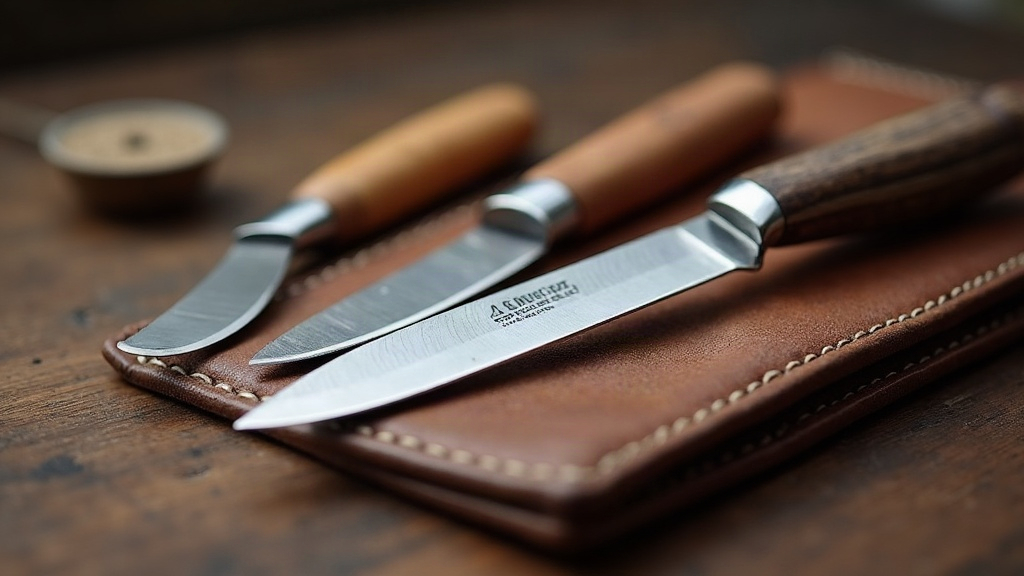
When you’re making handmade leather wallets, clean edges separate a finished product from something that just looks half-done. The process that gets you there is called skiving, thinning down the leather at the edges before you stitch everything together. So when someone asks about a French skiver vs. a Japanese skiving knife, they’re really asking about the two heavyweights of this trade. Short version: grab a French skiver if you’re new and just need reliable, narrow edge work. Reach for a Japanese skiving knife if you’ve got some mileage under your belt and want one blade that does almost everything.
Why Skiving Matters for Wallet Edges
Before we get into gear, let’s talk about why this step can’t be skipped. A plain bifold wallet often stacks three to six layers of leather right at the fold or seam. Leave that leather at full thickness and you end up with edges that feel like a brick in your pocket, wear out faster, and fight you every time you try to stitch through them cleanly.
Skive properly and here’s what you get:
- Less bulk overall: the wallet actually folds flat instead of gaping open.
- Smoother transitions: where pieces overlap, like at a card pocket seam, things lie flush instead of stepping up awkwardly.
- Better-looking edges: burnishing or edge paint goes on evenly instead of pooling in uneven spots.
The French Skiver: Precision and Consistency
The French skiver (sometimes called a French edge tool) has that distinctive scooped shape, with a blade that sits flat against the leather surface. You push it forward along the edge and it peels off thin curls of flesh-side material as you go, almost like using a tiny plane.
Benefits of the French Skiver
- Depth control built right in: the scoop shape physically stops the blade from biting too deep, so you get a consistent result down a long wallet edge without fighting the tool.
- Forgiving for newcomers: keep the blade sharp, keep your hand steady, and you’ll likely get usable results on your very first attempt. That’s rare in leathercraft.
- Great at narrow strips: taking a thin, even band off the edge of a card pocket or outer shell is exactly its job, and wallet making needs that constantly.
Drawbacks
- Narrow by design: you’re limited to the width of the tool itself, typically 4mm to 10mm. Want to thin the middle of a big panel? This isn’t the tool.
- Sharpening is a pain: that curved scoop doesn’t sit well on a flat strop or stone. Plenty of crafters end up making custom strops or using round files just to keep the edge honed.
The Japanese Skiving Knife: Versatility and Skill
The Japanese skiving knife (sometimes just called a leather knife) has a wide, single-bevel blade and has been a shop staple for generations. You hold it at a shallow, controlled angle and slice through the flesh side rather than pushing like you would with a French skiver.
Benefits of the Japanese Skiving Knife
- Does more than skive: straight cuts, pattern cutting, trimming, this blade handles it all. It’s often the one tool a shop can’t run without.
- Handles wide areas: unlike the French skiver, this knife can taper an entire panel, not just a thin strip along an edge.
- Sharpens like a dream: the flat single bevel takes to a whetstone easily, so keeping that razor edge (which you absolutely need for skiving) isn’t much of a chore.
Drawbacks
- Takes real practice: nailing the right angle takes time. Get it wrong and you’ll slice clean through the grain side, ruining a piece you may have spent an hour cutting out.
- Needs frequent stropping: sharpening is easy, sure, but you’ll be touching up the edge constantly mid-project if you want consistently smooth cuts.
Head-to-Head: Which is Better for Thinning Wallet Edges?
If your goal is fast, repeatable thinning on card slots and T-pockets, the French skiver wins this round. It removes the guesswork on depth, which matters a lot when you’re one slip away from ruining a piece you already cut to size. It’s a specialist, but a good one.
That said, if you’d rather carry fewer tools or want to actually learn a traditional skill that gives you full control, the Japanese skiving knife pulls ahead. Feather-thin edges, wide tapers for folds, general cutting duties, it covers all of it. Yes, the learning curve is steeper. But the payoff in flexibility is real once you’ve put in the hours.
Conclusion
Both tools earn their spot on a leatherworker’s bench, just in different ways. New to the craft, or just need quick, consistent wallet edges? Go French skiver. Want to build real skill and end up with a tool that handles nearly every cutting task you’ll face? The Japanese skiving knife is worth the climb. Either way, the real secret isn’t the tool itself, it’s keeping that blade razor sharp. Nothing else compensates for a dull edge.